Please don't hesitate to reach out to us whenever you need assistanco. Well make sure to respond to you promptly.
Info
lyang_huang@gadetin.com.cn
gadetin@gadetin.com.cn
+86 136 7623 8313
+86 153 3806 1804
09:00 - 18:00
No.2 Zhenglong 1st street, Dawang National Hi-tech Developmet Zone, Zhaoqing City, Guangdong, China
Newsroom
Discover the latest stories, innovations, and events shaping the world of Gadetin.
Private Label Products: A Complete Guide from a 10,000-Formula OEM Manufacturer
Blog
2026-10-26 Author : Ying Hong Huang
Private label products offer brands a practical way to enter the market, build a recognizable identity, and expand their product portfolios without investing in their own manufacturing facilities. From startups launching their first skincare line to established retailers developing products for large distribution networks, private labeling can provide a flexible path from product selection to market launch. Success, however, depends on choosing the right products, understanding customization options, and partnering with a manufacturer that can deliver consistent quality at the required scale.
With decades of manufacturing excellence, Gadetin Group brings over 30 years of experience to the beauty and personal care industry. Our capabilities combine mature formula development, product manufacturing, filling, packaging support, and quality management. Gadetin reports a 100,000 m² GMPC facility, 18 automated production lines, and daily filling capacity exceeding 800,000 units. Our R&D resources also include a library of more than 10,000 mature formulas. In this guide, we explain how private label products work, which categories brands can develop, how manufacturing and quality control are managed, and what to evaluate before choosing a private label manufacturer. To explore our full manufacturing capabilities, visit our Private Label Services page.
1. What Are Private Label Products?
A private label product is a finished good manufactured by a third party but sold exclusively under the brand name of the retailer or brand owner. Instead of building a factory and managing every stage of production, a business can work with an established manufacturer to select a suitable formula, choose packaging, develop branded labels, and produce finished goods.
In the beauty and personal care industry, private label products commonly include facial cleansers, serums, moisturizers, shampoos, body washes, and lotions. Depending on the manufacturer's capabilities and the agreed project scope, brands may select an existing formula, adjust certain product characteristics, or request additional development work.
The main advantage is that businesses can concentrate on branding, marketing, distribution, and customer relationships while relying on an experienced manufacturing partner for production. However, formula ownership, exclusivity, packaging customization, and other commercial rights should be defined in the agreement rather than assumed from the term "private label."
Private Label vs. White Label vs. ODM: Key Differences
Private label, white label, and original design manufacturing (ODM) all allow businesses to work with external manufacturers, but the level of product development and customization can differ significantly.
2. How to Start a Private Label Brand: Step by Step
Launching a private label product line involves several critical phases. While the exact process varies by category, the general roadmap remains consistent:
Research your niche and validate demand: Identify a gap in the market. Use tools like Amazon BSR, Google Trends, and social media listening to confirm there is active consumer demand for your intended product.
Choose your product category: Based on your research, select whether you will launch in skincare, hair care, baby care, or another niche. (See our category breakdown in Section 3).
Source and vet manufacturers: Look for OEM/ODM factories that specialize in your category. Evaluate their certifications, communication speed, and minimum order quantities (MOQs).
Request samples and test: Never proceed to mass production without testing. Evaluate the texture, fragrance, and packaging of the sample, and confirm the stability testing protocols with the factory.
Finalize branding and packaging: Design your logo and labels. Work closely with the manufacturer to ensure your packaging components (bottles, pumps, boxes) fit their filling lines and meet MOQ requirements.
Confirm regulatory compliance: Ensure the factory provides the necessary documentation (COA, MSDS, ISO certificates) for your target market. If selling in the US, understand FDA facility registration requirements.
Place your first production order: Sign the manufacturing agreement, pay the deposit, and agree on a production schedule and quality inspection process.
Launch and iterate: Once the goods arrive, launch your marketing campaigns. Use customer feedback to refine your formula and packaging for the second production run.
3. Best Private Label Products by Category (What You Can Manufacture)
Skincare Products
Skincare remains the most lucrative private label category because it combines high perceived value, strong repeat purchase behavior, and endless room for branding differentiation. Cleansers, toners, serums, and moisturizers are excellent entry points for new brands due to their broad demographic appeal.
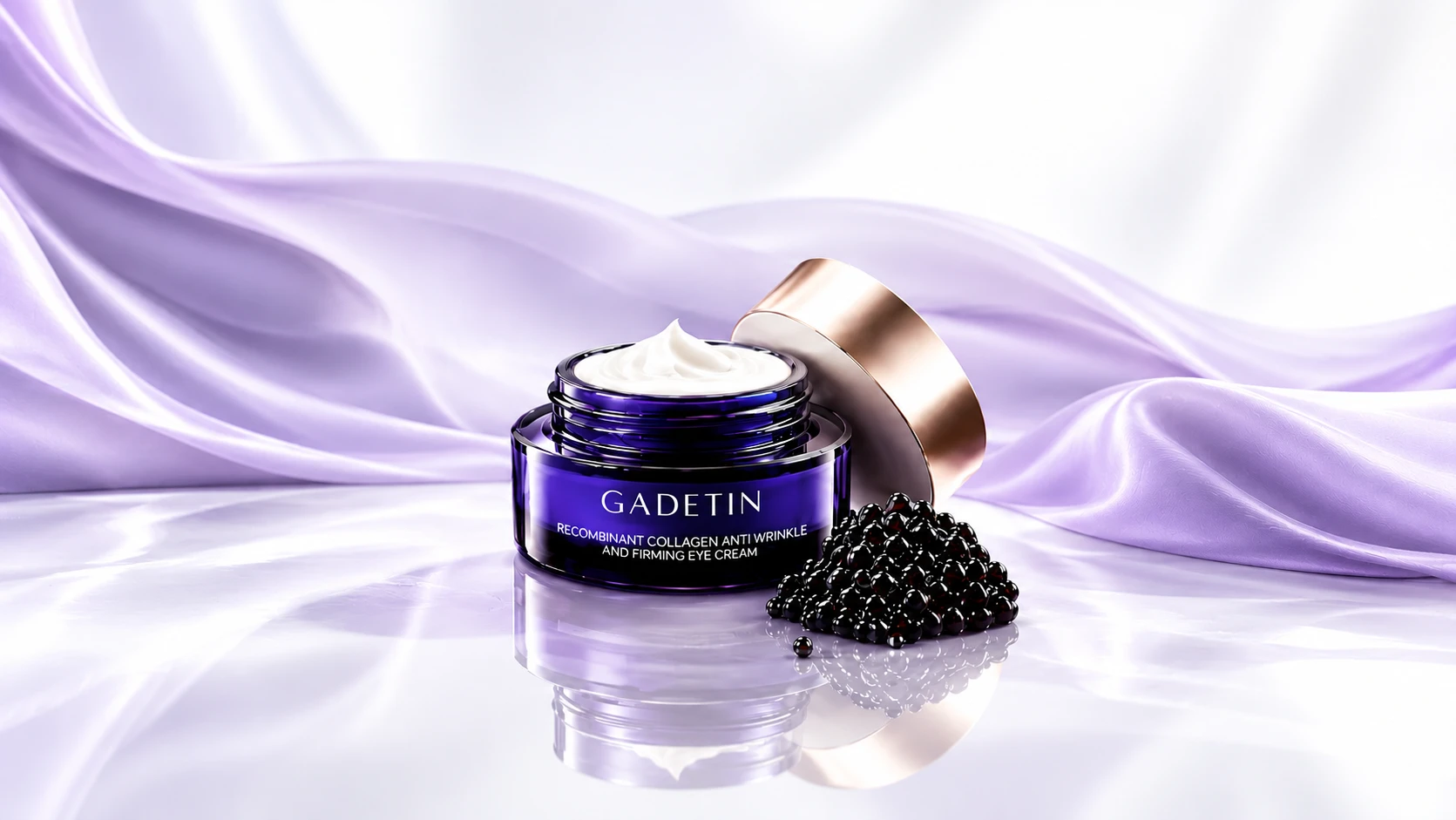
Premium private label face cream ready for your brand's packaging.
When evaluating skincare, brands should consider their target demographic, desired skin benefits (e.g., anti-aging, hydration), ingredient trends, and packaging design. A lightweight facial serum requires different formulation and packaging considerations than a thick night cream or a foaming cleanser.
To support these product demands, Gadetin maintains a mature formula library of over 10,000 formulations and an R&D portfolio featuring patented technologies. Brands can browse our ready-to-label skincare products to find a starting point, or explore our guide to private label skincare manufacturers for more selection tips.
Custom Formulation & Skincare
Some brands require more than a standard formulation. If you have a unique texture, an exclusive ingredient complex, or a specific performance target in mind, custom formulation is the route to take. While it requires a higher upfront investment and longer development time, it creates a defensible product that competitors cannot simply copy.
The custom process involves a product brief, ingredient sourcing, lab-scale prototyping, stability testing, and refinement before mass production. To learn how we turn unique concepts into market-ready products, discover our custom skincare formulation services. You can also read more about the process in our guide to custom skincare formulation.
Hair Care, Baby Care, Oral Care & Pet Care
Beyond skincare, several other categories offer high margins but require specific manufacturing expertise:
Hair Care: Shampoos, conditioners, and scalp treatments. Formulation challenges often involve balancing cleansing power with conditioning, and ensuring viscosity remains stable across temperature changes.
Baby Care: Lotions and gentle cleansers. Safety and regulatory compliance are paramount here; ingredient sourcing and dermatological testing documentation must be airtight.
Oral Care: Toothpastes and mouthwashes. Requires specialized equipment and strict adherence to local health regulations regarding fluoride levels and claim substantiation.
Pet Care: Pet shampoos and grooming solutions. Formulations must be optimized for different fur types and pH levels, and claims must be carefully reviewed against veterinary cosmetic guidelines.
Gadetin's production capabilities cover all these categories, utilizing 18 automated lines and a daily filling capacity exceeding 800,000 units.
4. How Private Label Products Are Actually Manufactured (Behind the Scenes)
Once you've selected your product category and confirmed a manufacturer, understanding how production actually works helps you ask the right questions and avoid costly surprises.
1. Formula Development & Sourcing
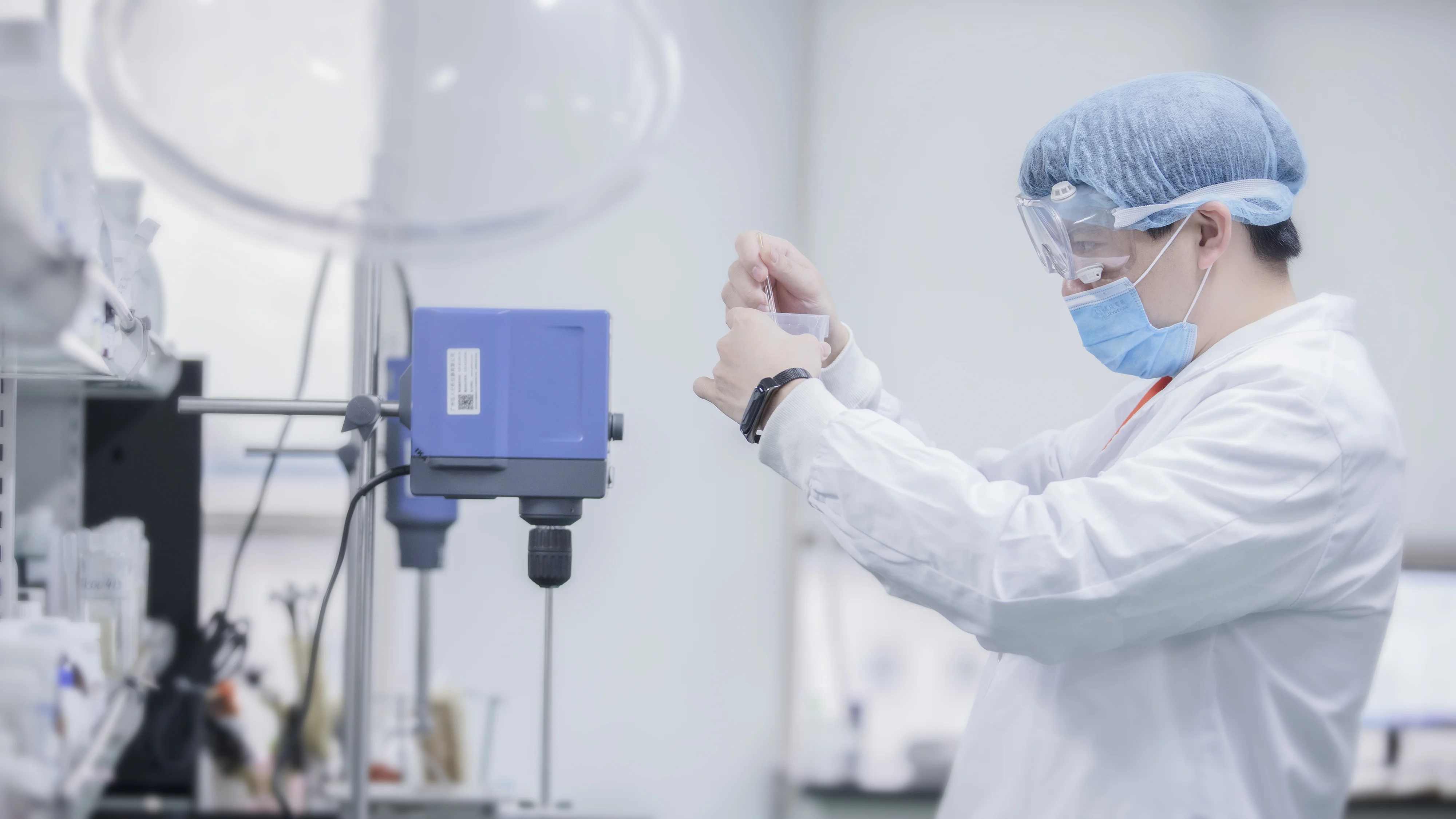
Our R&D team conducting formula development and stability testing.
Manufacturing begins with locking down the formula. A brand may choose a mature formula from our library or request development based on a specific brief. This phase involves evaluating intended use, key ingredients, texture, and fragrance. Ingredient availability and sourcing lead times must also be mapped out to prevent production delays later.
2. Stability & Compatibility Testing
Before mass production, the formula and proposed packaging must be tested. Stability testing examines how a product changes under defined conditions (heat, cold, light). A 48-hour accelerated stability check can provide early screening data, though it does not replace full shelf-life testing. Packaging compatibility testing ensures the formula does not degrade the container or leach chemicals. We issue a Certificate of Analysis (COA) for every batch to confirm these quality metrics.
3. Regulatory Compliance
Regulatory requirements must be considered before finalizing labels. Gadetin holds ISO 22716, GMPC, and BSCI certifications. For US markets, it's crucial to understand that FDA facility registration is not an "FDA approval" of the product itself. For European or Asian markets, different responsible party arrangements and documentation apply.
4. Mass Production & Filling
Once samples are approved and packaging arrives, the project moves to production. Bulk ingredients are mixed in large reactors, followed by filling, capping, labeling, and sealing. During this stage, in-line quality checks ensure the product matches the approved specifications before it is packed into shipping cartons.
5. How to Choose the Right Private Label Manufacturer
Where to Find Manufacturers and What to Ask First
You can source manufacturers through B2B platforms like Alibaba, Global Sources, industry trade shows (such as Cosmoprof), or direct Google searches. Before diving into deep audits, ask initial screening questions: What is your MOQ? What is your typical lead time? Can you provide samples? Do you manufacture this specific product type in-house, or do you outsource it?
Verify Certifications and Capabilities
Certifications are your first line of defense. Ask for current ISO 22716 or GMPC certificates. Crucially, check that the certificate covers the specific manufacturing site and the activities involved in your project. Do not treat a generic "FDA Registered" claim as proof of quality; verify the actual regulatory responsibilities. You can review our manufacturing facilities and certifications to see the standards we maintain.
Check MOQs, Capacity, and Hidden Costs
Understand whether your MOQ applies to the finished product, the raw bulk formula, or the packaging components. A low finished-goods MOQ might be negated by a high packaging MOQ (e.g., if the bottle factory requires 30,000 units). For a deeper dive into managing order quantities, see our guide to finding a low MOQ skincare manufacturer.
Trust and Track Record
Look for a partner with a proven history. Gadetin has served as a manufacturing partner for global retailers including Walmart, Watsons, and AEON. A reliable manufacturer will provide clear quotations, realistic production schedules, and written agreements covering specifications, quality standards, and intellectual property rights.
6. Common Challenges and Risks of Private Labeling
Private labeling simplifies product development, but it does not eliminate commercial risk. Understanding common pitfalls helps brands make informed decisions.
Hidden Costs and Budget Overruns: A low unit price often excludes development fees, testing, artwork, tooling, and freight. Always request an itemized quotation.
Formula Ownership Disputes: In practice, the most common dispute we see is a brand assuming it owns a formula simply because it paid for production. Unless a full buyout is explicitly stated in the contract, the manufacturer may retain rights to the base formula. Document ownership, exclusivity, and modification rights before development begins.
Production Delays: Delays often stem from raw material shortages, packaging lead times, or late artwork approvals. Build a realistic schedule that accounts for testing and logistics, rather than relying solely on the factory's production estimate.
7. Frequently Asked Questions (FAQ)
What Is the Minimum Order Quantity (MOQ) for Private Label Products? +
MOQ depends on the product, formula, and packaging. Gadetin's standard MOQ is generally 10,000 units per product, though more flexible arrangements can sometimes be discussed for specific projects. Always confirm if packaging materials have separate minimums.
Who Owns the Formula in a Private Label Partnership? +
Ownership depends on the agreement. For standard private label, the manufacturer typically retains ownership of the base formula. For custom ODM projects, the brand can negotiate full ownership or exclusive usage rights. This must be defined in writing before work starts.
How Much Does It Cost to Start a Private Label Product Line? +
Costs vary widely by category, but include formula development (if custom), sample fees, testing, packaging tooling, minimum order quantities, and freight. The barrier to entry has dropped significantly; you can often launch a basic line for a few thousand dollars by utilizing existing formulas and standard packaging.
How Long Does It Take to Manufacture a Private Label Product? +
Using mature formulas, production typically takes 4 to 8 weeks from approved samples to finished goods, depending on packaging availability. Custom formulation generally requires 3 to 6 months for development, testing, and validation.
What Quality and Regulatory Documents Should a Manufacturer Provide? +
You should request current facility certifications (ISO, GMPC), product specifications, a Certificate of Analysis (COA), stability and safety reports, and labeling compliance documents relevant to your target market.
Conclusion
Private label products give brands an opportunity to launch and expand their portfolios without building their own manufacturing infrastructure. Choosing the right partner requires more than finding an attractive unit price: brands should evaluate formula options, customization capabilities, quality systems, certifications, MOQs, production capacity, and contractual terms.
With a manufacturing history dating back decades, a reported library of more than 10,000 mature formulas, and integrated R&D and production resources, Gadetin Group supports brands exploring private label and custom-formulation opportunities across beauty and personal care categories.
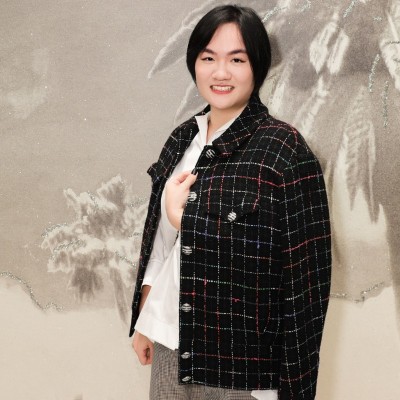
With over 10 years of experience in the beauty and personal care industry, Ying Hong has supported 200+ brands and 6,000+ product developments. Her expertise spans custom formulation, regulatory compliance, and OEM/ODM manufacturing. She shares practical insights to help beauty brands navigate product development and manufacturing.
Looking For A Trusted Skincare Manufacturer?
Gadetin provides full-service OEM/ODM solutions, from R&D innovation and custom formulation to private label and global supply chain management. Let our experts help you bring high-quality skincare products to market.
 lyang_huang@gadetin.com.cn
gadetin@gadetin.com.cn
 +86 136 7623 8313
 +86 153 3806 1804
 09:00 - 18:00
 No.2 Zhenglong 1st street, Dawang National Hi-tech Developmet Zone, Zhaoqing City, Guangdong, China

 English
 Français
 Русский язык
 español


