Please don't hesitate to reach out to us whenever you need assistanco. Well make sure to respond to you promptly.
 lyang_huang@gadetin.com.cn
gadetin@gadetin.com.cn
lyang_huang@gadetin.com.cn
gadetin@gadetin.com.cn +86 136 7623 8313
 +86 153 3806 1804
 09:00 - 18:00
 No.2 Zhenglong 1st street, Dawang National Hi-tech Developmet Zone, Zhaoqing City, Guangdong, China
Private label and custom formulation are the two main ways to make skincare and personal care. Private label puts your brand on a manufacturer's ready-made formula — fastest and cheapest, usually 4–8 weeks to market with a lower MOQ (often 3,000–5,000 units). Custom formulation develops a unique formula to your brief, takes 3–6 months and costs more up front, but gives you differentiation and IP protection under an NDA. The real choice is not "which is better" but "which fits your stage": private label to test demand cheaply, custom formulation once you have sales proof and need a defensible hero product.
Most brands ask this too late — after sinking months into custom work for an unproven idea, or after building a brand on a shared base a competitor also sells. Below we go past cost and lead time into NDA reality, who holds your regulatory files, the me-too trap, and a staged path that protects both your cash and your edge. If you have a product idea in mind, our team can quote both routes and show the contract clauses that keep your formula yours.
1. The Question Most Brands Ask Too Late
2. What "Exclusive" Really Means: An NDA Reality Check
3. Cost and Time: The Numbers Buyers Actually Feel
4. Regulatory Files and Who Holds Your PIF
5. The Me-Too Trap: When Private Label Undercuts Your Brand
6. A Staged Path: Validate with PL, Defend with CF
7. How to Transition Without Losing Momentum
8. Decision Checklist: Which Model Fits You Now
9. FAQ
"Should we private label or custom formulate?" is usually asked at the wrong moment — after a brand has already committed. The smarter question is when: at what proof point does custom formulation stop being a risk and start being a moat?
Private label wins on speed and cash. Custom formulation wins on differentiation and defensibility. Neither is "premium" or "cheap" by moral worth; they are tools for different stages. The brands that scale pick the tool that matches their evidence, not their ambition.
Buyers hear "your formula is exclusive" and relax. The reality is narrower.
· Private label exclusivity is almost always a license, not ownership. The factory owns the base; you get regional or time-bound rights not to compete with another labeled version. Ask exactly what is excluded and for how long.
· Custom formulation exclusivity comes from a written NDA plus an IP-assignment or exclusive-license clause. Even then, enforceability depends on the contract's jurisdiction and on the factory's incentive to comply. A capable manufacturer protects your brief because repeat business matters more than one stolen formula.
· The trap: a verbal "don't worry, it's yours" with no clause means the factory can relaunch your "unique" serum under another client the next quarter.
Exclusivity is a contract artifact, not a property of the model. Negotiate the clause; don't assume the label.
The headline gap is cash and clock, but the felt difference is heavier than the table suggests.
Factor | Private label | Custom formulation |
Time to market | 4–8 weeks | 3–6 months |
Upfront cost | Low (no R&D fee) | Higher (R&D + testing) |
Formula exclusivity | Licensed, often shared | Yours under NDA |
Differentiation | Low to medium | High |
MOQ | Lower (often 3,000–5,000) | Higher (often 20,000+ for custom mold) |
Regulatory file | Usually ready | Built for your formula |
The practical rule: if your biggest risk is "will anyone buy this?", private label lets you find out for a fraction of the cash. If your biggest risk is "a competitor copies my hero product," custom formulation is the insurance. For what actually moves your unit price beyond MOQ and tooling, see our breakdown of what really drives private label cosmetics cost.
A detail buyers underweight: who is the responsible person and who holds the file.
· Private label usually rides on the factory's existing compliance dossier (e.g., a European PIF or U.S. FDA alignment) tied to the shared base. You inherit it — fast, but it covers that formula, not a tweak you make later.
· Custom formulation builds a dossier for your formula: stability, safety, efficacy and the responsible-person file. You control it, and a future reformulation updates your file, not the factory's shared one.
If you sell into the EU, UK, Gulf or other regulated markets, ask early who holds the PIF and whether you can transfer it if you switch factories. The answer changes your exit risk more than the unit price does.
Private label is safe until it becomes your whole identity. The me-too trap has two forms:
1. Visible sameness — your "signature" serum is recognizably the factory's stock base, and a competitor undercuts you on price the same week you launch.
2. Claim fatigue — every private label brand in your niche makes the same "gentle, clean, vegan" claims, so none of you owns a story.
The fix is not to abandon private label but to use it where sameness is fine (basics, bundles, trial sizes) and reserve custom formulation for the one or two SKUs that carry your brand promise. Most strong brands run both in parallel: a private label base for cash flow, a custom hero for identity.
You do not have to choose once and forever. A staged path protects both cash and edge:
· Stage 1 — Validate. Launch a private label line to learn what customers actually buy. Low MOQ keeps inventory risk small.
· Stage 2 — Listen. Let sales data show which SKU deserves to be your hero.
· Stage 3 — Defend. Commission a custom formulation of that hero — unique texture, actives or claim no competitor shares.
· Stage 4 — Expand. Use the custom hero to justify a higher price and fund the next private label extension.
This sequence turns private label from a compromise into the cheap evidence-gathering step before custom work. For the OEM/ODM framing behind these models, see our OEM vs ODM cosmetics guide.
The risk in graduating from PL to CF is the gap: while custom work runs 3–6 months, your private label line keeps selling, so you never go dark. Practical safeguards:
· Keep one partner. A dual-mode OEM/ODM supplier carries your stability data and certs across both phases, so the custom hero reuses what the private label line already proved.
· Phase the launch. Soft-launch the custom hero to your existing customers first; they already trust the brand.
· Protect the brief. Sign the NDA and IP clause before the first lab sample, not after.
Done well, the transition is invisible to customers and decisive to competitors.
· Choose private label if you are pre-launch, cash-tight, or testing whether a category sells at all.
· Choose custom formulation if you have sales proof and your brand rests on a unique formula, texture or claim.
· Choose both if you need cash flow now and a defensible hero later — run PL for basics, CF for the hero.
· Choose neither yet if you have no clear product idea; start with our private label personal care hub to scope the category first.
1. Is private label cheaper than custom formulation?
Yes, usually. Private label skips the R&D and testing phase, so you pay mainly for production. Custom formulation adds lab development, stability and safety testing, which raises upfront cost.
2. How long does custom formulation take?
Typically 3–6 months, covering brief, ingredient screening, lab sample, stability and safety testing, efficacy evaluation and final confirmation before mass production.
3. Can I make a private label product exclusive later?
Often yes, through a custom formulation upgrade. Many brands begin with a private label base, then ask the factory to develop a unique version once demand is proven.
4. What MOQ should I expect for private label skincare?
It varies by factory and packaging. A common range is 3,000–5,000 units for stock packaging, and 20,000+ units for a fully custom mold.
5. Will the factory own my custom formula?
With a proper confidentiality and IP-assignment clause, the custom formula is developed to your brief and belongs to your brand, not shared with others. Without that clause, assume it is not protected.
6. Which model is better for a first-time brand?
Private label is usually better for a first launch because it is faster and lower risk. Move to custom formulation once you have sales proof and a clear point of difference.
7. Do I still need regulatory files with private label?
Yes. Even with a shared formula, confirm the factory supplies the compliance documents your target market requires, such as EU PIF or U.S. FDA alignment, and that you can use them for your branded SKU.
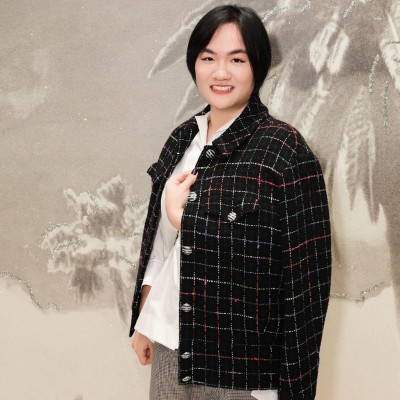
With over 10 years of experience in the beauty and personal care industry, Ying Hong has supported 200+ brands and 6,000+ product developments. Her expertise spans custom formulation, regulatory compliance, and OEM/ODM manufacturing. She shares practical insights to help beauty brands navigate product development and manufacturing.

 English
 Français
 Русский язык
 español


