Please don't hesitate to reach out to us whenever you need assistanco. Well make sure to respond to you promptly.
 lyang_huang@gadetin.com.cn
gadetin@gadetin.com.cn
 +86 136 7623 8313
 +86 153 3806 1804
 09:00 - 18:00
 No.2 Zhenglong 1st street, Dawang National Hi-tech Developmet Zone, Zhaoqing City, Guangdong, China

Choosing a men's grooming manufacturer is not simply about finding a supplier that can put a formula into a masculine-looking bottle. Men's grooming products need to match specific consumer routines, sensory preferences, product positioning, packaging expectations and increasingly diverse skincare needs.
A strong men's grooming manufacturer should be able to connect product positioning with formulation, packaging, manufacturing and long-term product-line development.
For one brand, that may mean launching a simple facial cleanser and moisturizer. For another, it may mean building a broader range around oil control, post-shave care, beard grooming, body care or daily skincare.
The sourcing decision therefore begins with understanding what type of men's care brand you are trying to build.
This guide explains how B2B buyers can evaluate product direction, OEM models, formulation capability, packaging, quality management and supplier fit before starting a men's grooming project.
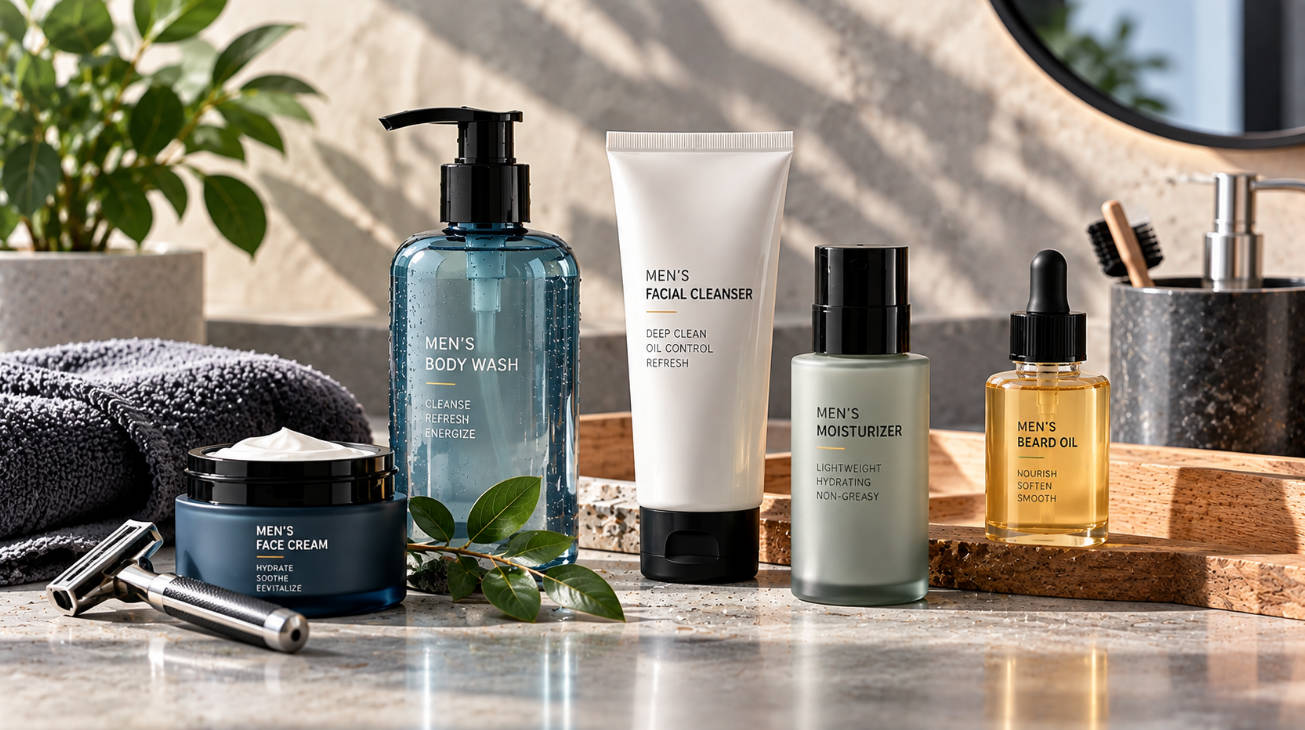
Men's grooming was once strongly associated with shaving products.
That is no longer enough for many brands.
Modern men's care can include several product groups:
| Category | Typical Product Direction |
|---|---|
| Facial Cleansing | Daily cleanser, oil-control cleansing |
| Facial Care | Moisturizer, lotion, serum |
| Shaving Care | Shave gel, cream or related preparation |
| Post-Shave Care | Soothing or moisturizing after-shave products |
| Beard Care | Beard oil, balm or grooming products |
| Body Care | Body wash, lotion and daily hygiene |
| Scalp & Hair Care | Shampoo and scalp-focused grooming |
| Multi-Use Grooming | Simplified products designed for convenient routines |
This creates both opportunity and complexity.
Brands need to decide whether they are building:
A specialist grooming brand
A men's skincare range
A beard-focused business
A lifestyle personal care brand
A wider male care portfolio
That decision affects manufacturing requirements.
Brands exploring different product directions can start with GADETIN's Men's Care solutions when defining the category structure.
A common product-development mistake is choosing ingredients first.
For example:
We want a men's moisturizer with several botanical ingredients.
That says little about the actual consumer problem.
A stronger development brief would define:
Age range
Skin type
Daily routine
Main concern
Preferred texture
Usage frequency
Product complexity
Price positioning
Sales channel
For example:
We want a lightweight daily moisturizer for men with combination-to-oily skin who prefer a fast routine and dislike heavy residue.
That immediately gives the formulation team more useful direction.
Men's grooming development should begin with the intended routine and user experience, not with a list of fashionable ingredients.
Different men's grooming products serve different needs.
A brand targeting oily skin may focus on:
Cleansing feel
Lightweight texture
Low-residue application
Daily convenience
Post-shave products may focus on:
Comfortable skin feel
Lightweight hydration
Easy application
Compatibility with shaving routines
A men's moisturizer may need:
Fast spread
Quick absorption
Minimal heavy residue
Simple packaging
Convenient routine fit
Beard-related products may need to consider:
Application control
Oiliness
Fragrance
Hair feel
Skin feel underneath facial hair
Different use cases create different formulation priorities.
A men's grooming supplier should understand those distinctions.
New brands often assume that a complete launch requires many products.
That can create unnecessary complexity.
A more focused men's grooming range might begin with:
Cleanse → Moisturize → Targeted Care
For example:
Facial cleanser
Daily moisturizer
Post-shave or oil-control product
A grooming-focused brand might instead use:
Cleanse → Shave → Soothe
Or a beard-focused brand could use:
Cleanse → Condition → Groom
The product architecture should make sense to the customer.
A smaller, coordinated men's care range can be more commercially coherent than a large collection of unrelated products.
Brands should decide early how much product development they need.
| Manufacturing Model | Main Characteristics | Suitable For |
|---|---|---|
| Ready Private Label | Existing formula with brand customization | Faster launch |
| Modified Private Label | Existing product with selected adjustments | Moderate differentiation |
| Custom Formulation | Product created around a defined brief | Stronger differentiation |
| OEM Production | Manufacturing according to agreed product specifications | Established product concepts |
Private label may be appropriate when:
Speed matters
The brand is testing market demand
Packaging and positioning provide most of the differentiation
The company has limited R&D resources
A mature product starting point is preferred
Custom formulation may be more appropriate when:
Texture is central to product identity
A specific skin-feel profile is required
The brand wants stronger differentiation
Product performance is part of the core positioning
A long-term proprietary product range is planned
Neither model is automatically better.
The right option depends on commercial goals.
Men's skincare products are still skincare products.
The manufacturer needs to understand:
Cleansing systems
Emulsion structure
Texture
absorption
skin feel
ingredient compatibility
fragrance
packaging
stability
commercial manufacturing
However, the desired sensory experience may differ from other beauty categories.
Many men's grooming concepts prioritize attributes such as:
Convenience
Lightweight texture
Fast absorption
Simple dispensing
Clean finish
Non-heavy feel
That does not mean every men's product must follow the same formula.
The correct sensory profile depends on positioning.
Ask:
How do you develop formulas from a men's grooming brief?
Can textures be adjusted?
Can fragrance intensity be changed?
Can existing formulas be modified?
How are samples evaluated?
Can several products be developed as one coordinated range?
A capable men's skincare manufacturer should be able to explain these decisions clearly.
A black bottle does not automatically create a men's grooming product.
Nor does adding a stereotypically masculine fragrance.
Product development should consider actual use behavior.
For example:
A men's moisturizer should not be made unnecessarily heavy simply because premium packaging is used.
A post-shave product should not focus only on fragrance while ignoring application feel.
A cleanser should not use overly aggressive sensory cues simply to appear more powerful.
The product experience should support the intended routine.
Packaging then reinforces that positioning.
Fragrance can play a significant role in grooming.
Different brands may prefer:
Fresh
Woody
Citrus
Herbal
Clean
Low-fragrance
Neutral sensory positioning
But stronger fragrance is not always better.
Consider:
Where the product is used
How long it remains on skin
Whether several products will be layered
Whether the target consumer prefers subtle grooming
How fragrance fits the overall brand identity
If cleanser, moisturizer, shave care and beard products are sold together, fragrance coordination can make the range feel more unified.
Packaging is both functional and visual.
Potential formats may include:
Pump bottles
Tubes
jars
dropper bottles
flip-top bottles
dispensing bottles
The correct choice depends on the formula and usage scenario.
| Product | Packaging Considerations |
|---|---|
| Facial Cleanser | Easy use near sink or shower |
| Moisturizer | Controlled dispensing |
| Beard Oil | Precise application |
| Shave Product | Convenient repeat dispensing |
| Post-Shave Product | Controlled, hygienic use |
| Body Wash | Shower-friendly handling |
The product should be easy to use without unnecessary complexity.
Good grooming packaging supports the routine first and reinforces brand identity second.
Before mass production, the formula needs to become a physical sample.
The brand should evaluate:
Texture
appearance
fragrance
spread
absorption
residue
dispensing
overall user experience
Feedback should be specific.
Instead of:
Make the moisturizer more masculine.
Use:
We want faster absorption, less shine after application and a lighter fragrance.
That gives the R&D team something practical to change.
A useful review system separates feedback into:
Elements that fail to match the agreed brief.
Changes that may improve the consumer experience.
Characteristics that already work.
This reduces unnecessary revision.
It also prevents brands from repeatedly redesigning a product without clear commercial reason.
The approved sample is only one milestone.
The manufacturer still needs to reproduce that product commercially.
Buyers should ask:
How is the final formula documented?
How does laboratory development transfer to production?
How are specifications controlled?
How are packaging components coordinated?
How are final products checked?
The real value of an OEM manufacturer is not only creating a good sample, but producing the approved product consistently at commercial scale.
Quality management should be discussed during supplier evaluation.
Buyers should understand how the manufacturer handles:
| Stage | Typical Evaluation Area |
|---|---|
| Raw Materials | Material control |
| Bulk Manufacturing | Formula and process consistency |
| Filling | Fill and container handling |
| Packaging | Closure, appearance and labels |
| Finished Product | Final specification review |
| Batch Records | Production traceability |
The exact system will vary.
The important factor is whether the manufacturer can explain its process clearly.
GADETIN positions R&D, manufacturing and quality assurance within its wider beauty manufacturing structure, which is relevant for brands looking beyond simple finished-product sourcing.
Brands can explore the broader GADETIN manufacturing platform when evaluating long-term OEM cooperation.
These are not always the same requirement.
A men's skincare-focused brand may primarily need:
Cleanser
moisturizer
serum
oil-control care
A grooming-focused brand may additionally require:
Shave care
post-shave care
beard products
body care
hair care
If the long-term strategy involves multiple categories, supplier breadth becomes more important.
Using one partner across connected categories can help coordinate:
Packaging
fragrance
product positioning
production
communication
future launches
GADETIN's Men's Care category is the most relevant internal starting point for this type of product planning.
A technically capable manufacturer still needs to understand your project.
During the inquiry stage, pay attention to whether the supplier asks:
Who is the consumer?
What market are you targeting?
What products are launching first?
What customization level is required?
What packaging direction are you considering?
Is this a one-product launch or a broader range?
Those questions show whether the manufacturer is thinking beyond production.
Use the same criteria for every supplier.
| Evaluation Area | What to Look For |
|---|---|
| Men's Care Experience | Understanding of grooming and skincare use cases |
| Formulation | Ability to adapt product experience to positioning |
| Private Label | Efficient launch options |
| Custom Development | Ability to create differentiated products |
| Sampling | Clear development and feedback workflow |
| Packaging | Coordination between formula and container |
| Scale-Up | Production transfer capability |
| Quality | Structured control process |
| Communication | Specific, useful responses |
| Expansion | Ability to support future men's care categories |
This makes comparison more meaningful than simply placing quotations side by side.
Visual identity matters, but the formula and usage experience must support the concept.
Different consumer groups have different preferences.
Product strategy should be based on customer research, not stereotypes.
A focused routine can make brand communication clearer.
Expand after learning which products customers value.
Fragrance supports the experience but should not replace formulation strategy.
A product that is inconvenient to dispense can damage repeat-use experience.
Consider development scope, samples, quality, packaging support and communication.
Private label can provide a practical entry route when a brand wants to:
Test consumer demand
launch quickly
build marketing before deeper R&D investment
create a small initial range
refine positioning through market feedback
A brand may later move into custom development once it understands customer preferences more clearly.
Custom formulation is worth considering when:
A distinctive texture is important
The brand has clear performance goals
Sensory experience drives differentiation
Existing formulas do not match positioning
A signature grooming range is being developed
The investment should support a specific commercial objective.
Custom formulation for its own sake does not automatically create a stronger product.
A practical development strategy may begin with three core products.
For example:
Phase 1
Facial cleanser
moisturizer
post-shave product
Phase 2
Oil-control treatment
body wash
beard grooming
Phase 3
Hair and scalp care
additional facial treatments
complementary grooming products
The exact sequence depends on customer demand.
The important point is to create a product architecture that supports expansion.
GADETIN presents Men's Care within its broader private label and custom-formulation manufacturing structure, with men's grooming direction including grooming, post-shave care and oil-control positioning.
For brands researching men's personal care manufacturing, the GADETIN Men's Care range provides the most relevant category entry point.
Companies planning a wider beauty or personal care portfolio can also review the GADETIN beauty manufacturing platform for broader product-development and OEM options.
Choosing a men's grooming manufacturer requires more than checking whether a supplier can make cleanser, moisturizer or grooming products.
Brands should evaluate:
Target-market understanding
Men's skincare formulation capability
Private label options
Custom development
Sample process
Fragrance and sensory development
Packaging
production scale-up
quality management
communication
future product expansion
The right men's grooming manufacturer should help turn a clear consumer and brand strategy into products that are practical to manufacture, easy to use and consistent with the intended market position.
Start with the consumer routine.
Then define the product system.
Only after that should formulation, packaging and manufacturing decisions be finalized.
That approach creates a stronger foundation for building a sustainable men's grooming brand.
A men's grooming manufacturer may produce skincare, cleansing, shaving, post-shave, beard, body or related personal care products depending on its manufacturing capabilities.
Evaluate formulation capability, men's care experience, customization options, sampling procedures, packaging support, quality management, production scale-up and communication.
Male care OEM manufacturing refers to producing men's personal care or grooming products for another brand according to agreed specifications or development requirements.
Yes. Private label manufacturing allows brands to launch men's skincare under their own branding using existing or customizable product solutions, depending on the manufacturer's service model.
Private label can be useful for faster market testing, while custom formulation is better suited to brands requiring stronger formula differentiation. The decision depends on strategy, budget and development goals.
There is no universal product set. Many brands benefit from starting with a focused routine such as cleanser, moisturizer and one targeted grooming product before expanding.
Manufacturers with relevant men's care formulation capability may support post-shave care. Brands should confirm specific product and customization options directly with the supplier.
Prepare your target consumer, product category, desired texture, fragrance direction, packaging concept, market positioning, target market and customization expectations.
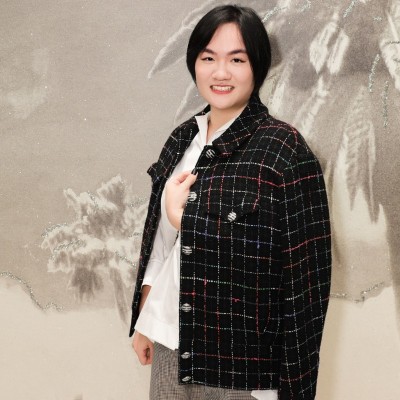
With over 10 years of experience in the beauty and personal care industry, Ying Hong has supported 200+ brands and 6,000+ product developments. Her expertise spans custom formulation, regulatory compliance, and OEM/ODM manufacturing. She shares practical insights to help beauty brands navigate product development and manufacturing.

 English
 Français
 Русский язык
 español


