Please don't hesitate to reach out to us whenever you need assistanco. Well make sure to respond to you promptly.
 lyang_huang@gadetin.com.cn
gadetin@gadetin.com.cn
 +86 136 7623 8313
 +86 153 3806 1804
 09:00 - 18:00
 No.2 Zhenglong 1st street, Dawang National Hi-tech Developmet Zone, Zhaoqing City, Guangdong, China

Choosing between private label and custom formulation is one of the most important decisions for beauty brands developing skincare products.
Private label allows brands to launch products faster by using existing formulas, while custom formulation creates unique products developed around specific brand requirements.
Neither option is suitable for every business.
The right choice depends on:
Brand positioning
Budget
Development timeline
Product differentiation goals
Target customers
Long-term business strategy
A startup looking for a faster market entry may choose private label skincare products, while a brand building a unique product identity may prefer custom skincare formulation.
Understanding the differences helps brands select the right manufacturing approach and avoid unnecessary development costs.
GADETIN provides skincare product development and manufacturing support for brands evaluating different OEM cooperation models through its skin care manufacturing solutions.
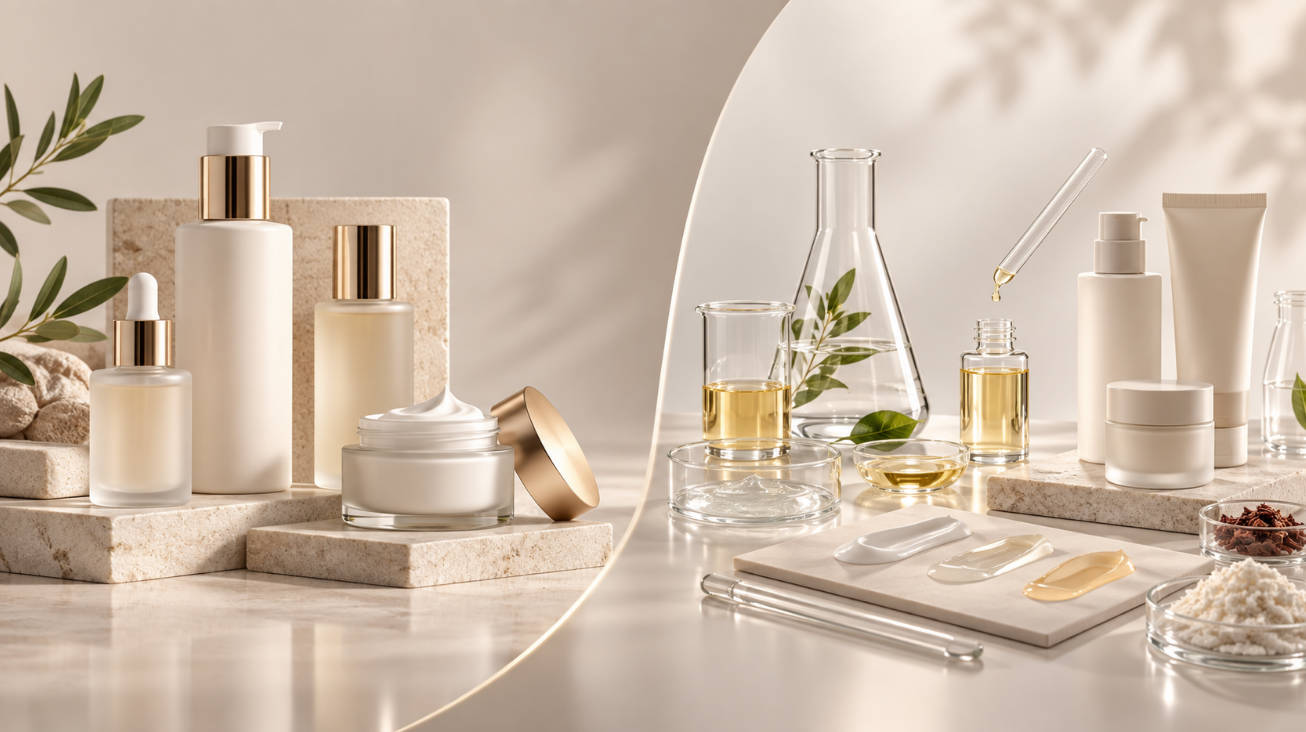
Private label skincare means a manufacturer provides existing formulas that brands can customize with their own:
Brand name
Packaging
Labels
Product positioning
The formula has usually been developed and tested by the manufacturer.
Brands mainly focus on:
Branding
Marketing
Sales channels
Customer acquisition
Private label is commonly chosen by companies that want to enter the skincare market efficiently.
Custom formulation means creating a skincare product based on a brand's specific requirements.
The development process usually involves:
Product concept planning
Ingredient selection
Formula development
Sample testing
Adjustments
Final production
Custom formulation provides more control over:
Product texture
Ingredient direction
Functional positioning
Consumer experience
Custom formulation turns a product idea into a unique skincare solution designed around a brand's specific market strategy.
The biggest difference is control: private label prioritizes speed and efficiency, while custom formulation prioritizes uniqueness and product ownership.
Private label allows brands to start with existing product concepts and focus resources on:
Branding
Packaging
Marketing
Distribution
This approach can shorten the path from idea to product launch.
Cosmetic chemists
Product developers
Regulatory specialists
Working with an experienced manufacturer allows brands to use existing expertise.
Customer interest
Product positioning
Sales channels
before investing in larger product development projects.
This can help startups manage early-stage budgets.
A unique formula can help brands differentiate through:
Product experience
Ingredient concept
Texture
Function positioning
Custom development is suitable when brands have clear requirements such as:
Specific texture
Particular ingredient direction
Special application experience
Unique product concept
Established brands often invest in custom development because products become part of their identity.
A unique formulation can support:
Brand recognition
Product expansion
Customer loyalty
Custom skincare formulation is usually chosen by brands that view product development as a long-term competitive strategy.
Cost is one of the biggest considerations when choosing a development model.
Private label generally requires lower upfront investment because the formula already exists.
Custom formulation requires more resources because manufacturers need to develop and optimize the product.
However, brands should evaluate cost together with long-term value.
A lower initial investment does not always create the strongest market differentiation.
The development timeline can influence product launch plans.
Brands with urgent launch plans may prefer private label.
Brands with flexible timelines may invest in custom development.
Product differentiation is especially important in crowded skincare markets.
Brands can differentiate through:
Packaging design
Marketing strategy
Brand story
Customer experience
However, the formula itself may not be completely unique.
Brands can differentiate through:
Unique formulas
Ingredient concepts
Product performance goals
Specific consumer needs
For brands building premium skincare positioning, custom development may provide more opportunities.
There is no universal answer.
Brands should evaluate several factors.
Choose private label if the goal is:
Launch quickly
Test demand
Reduce initial complexity
Choose custom formulation if the goal is:
Create unique products
Build long-term differentiation
Develop proprietary concepts
Consider:
Target customers
Price positioning
Competitor environment
Product expectations
A premium skincare brand may require more customization than a general beauty retailer.
Some brands do not need to choose only one approach.
A hybrid strategy can also work.
For example:
Brands can:
Enter the market quickly
Test customer response
Build sales channels
After understanding customer demand, brands can invest in:
Signature products
Customized formulas
Expanded product lines
This approach allows brands to balance speed and differentiation.
Regardless of the development model, choosing the right manufacturer is critical.
Brands should evaluate:
Ask:
Can the supplier support formula development?
Can they adjust products according to requirements?
Can they explain technical decisions?
Consider:
Production consistency
Quality management
Packaging support
Product range
A reliable manufacturer should clearly explain:
Development steps
Sample adjustments
Production requirements
Expected timelines
GADETIN supports brands through skincare OEM development and manufacturing services. Companies can explore the GADETIN skincare category to understand available product directions.
Some startups invest heavily in customization before understanding market demand.
A phased approach may reduce risk.
Private label products still require:
Strong branding
Clear positioning
Effective marketing
Brands should consider:
Development support
Communication efficiency
Manufacturing capability
Long-term cooperation
A suitable manufacturer should support future growth.
For brands deciding between private label and custom formulation, the manufacturing partner plays an important role.
GADETIN supports skincare brands with:
Product development support
Skincare manufacturing solutions
Customization options
Production cooperation
A professional manufacturer helps brands evaluate whether private label, custom formulation or a combination approach better matches their goals.
Brands can also visit the GADETIN website to learn more about skincare manufacturing capabilities.
The choice between private label vs custom formulation depends on a brand's goals, resources and market strategy.
Private label is suitable for brands that prioritize speed, efficiency and lower initial complexity, while custom formulation is suitable for brands seeking stronger product differentiation and long-term development.
Before selecting a manufacturing approach, brands should consider:
Product positioning
Budget
Timeline
Customer expectations
Future growth plans
The right skincare manufacturer does not only produce products.
It helps brands choose the right development path and transform ideas into market-ready skincare solutions.
Private label uses existing formulas with branding customization, while custom formulation creates new products based on specific brand requirements.
Private label usually requires lower initial investment because formula development costs are reduced.
Custom formulation may provide more opportunities for differentiation through unique formulas, textures and product concepts.
Development time depends on formula complexity, sample revisions, testing requirements and production planning.
Yes. Some brands launch with private label products first and later develop customized formulas.
Evaluate R&D capability, manufacturing experience, customization options, quality management and communication process.
With over 10 years of experience in the beauty and personal care industry, Ying Hong has supported 200+ brands and 6,000+ product developments. Her expertise spans custom formulation, regulatory compliance, and OEM/ODM manufacturing. She shares practical insights to help beauty brands navigate product development and manufacturing.

 English
 Français
 Русский язык
 español


