Please don't hesitate to reach out to us whenever you need assistanco. Well make sure to respond to you promptly.
 lyang_huang@gadetin.com.cn
gadetin@gadetin.com.cn
 +86 136 7623 8313
 +86 153 3806 1804
 09:00 - 18:00
 No.2 Zhenglong 1st street, Dawang National Hi-tech Developmet Zone, Zhaoqing City, Guangdong, China

Choosing a private label hair care manufacturer is not simply a matter of finding a factory that can fill shampoo bottles. The right manufacturing partner should be able to translate your brand positioning into practical products, support formula and packaging decisions, maintain production consistency, and provide a cooperation model that fits your stage of growth. A suitable private label hair care manufacturer should combine formulation capability, relevant product experience, production control, packaging support, quality management, and responsive project communication. This matters whether you are launching a first shampoo and conditioner set or expanding an established beauty brand into scalp care, masks, leave-in products, or other customized hair care categories. The following guide focuses on the factors B2B buyers should evaluate before selecting a hair care OEM partner. Before comparing manufacturers, define what you actually need from one. A startup looking for a fast private label launch has different requirements from an established brand developing a differentiated scalp-care system. Clarify these points first: Target customer Target market Hair or scalp concern Initial product categories Brand positioning Formula customization expectations Packaging direction Planned sales channels Future product-line expansion Without these decisions, supplier comparisons tend to become little more than price comparisons. The clearer your product and commercial brief is, the easier it becomes to identify a manufacturer whose capabilities genuinely match your project. For brands evaluating possible shampoo, conditioner and related product directions, GADETIN's hair care manufacturing solutions provide a useful starting point for category planning. “Private label” can describe several levels of manufacturing cooperation. The differences matter because they affect development time, customization, technical involvement and product differentiation. A manufacturer may support more than one model. The important question is not whether OEM or private label is “better,” but which model fits your product strategy. Private label is often practical when: You want to validate market demand Speed to market matters You do not have an internal formulation team Packaging and branding are the primary areas of differentiation You want to start with a focused range before investing in deeper R&D Custom hair care development may be more appropriate when: Your brand has a specific product concept Formula differentiation is central to positioning You have clear sensory requirements You want to address a defined hair or scalp concern You are planning a long-term proprietary product range Ask potential suppliers to explain clearly what can and cannot be customized under each model. A general personal care manufacturer is not automatically the right partner for a serious hair care project. Hair care formulation involves multiple interacting factors: Cleansing performance Conditioning Foam profile Detangling Hair feel Scalp feel Viscosity Fragrance Appearance Ingredient compatibility Packaging compatibility For a shampoo manufacturer, the formula must balance cleansing with the sensory expectations of the target customer. For conditioner, masks and leave-in products, the formulation priorities change. A buyer should therefore ask how the manufacturer approaches different product categories rather than simply asking, “Can you make shampoo?” Ask potential suppliers: Do you support custom hair care formulation? Can existing formulas be modified? How is a product brief converted into a formulation direction? What information do you need from the brand? How are samples developed? How is feedback handled? How do you prepare an approved formula for commercial production? A strong hair care OEM partner should be able to explain the path from product concept to manufacturable formula in clear commercial terms. Your first product may be shampoo, but your future product line may not stop there. Depending on your brand strategy, potential categories could include: Shampoo Conditioner Hair mask Scalp cleanser Scalp-care products Leave-in treatment Hair serum Hair oil Styling or finishing care A manufacturer with broader category coverage may be useful if you plan to build coordinated product sets. For example, launching shampoo and conditioner with the same partner can simplify: Formula coordination Fragrance consistency Packaging sourcing Production communication Product-line expansion Explore GADETIN's hair care product range when mapping potential product extensions beyond a single shampoo SKU. One common sourcing mistake is evaluating a manufacturer mainly by whether it can add fashionable ingredients. Ingredients matter, but hair care products are systems. A commercially viable formula also needs to consider: Ingredient compatibility Stability Product texture Sensory profile Rinse behavior Packaging format Production feasibility Target market positioning Two shampoos can use similar headline ingredients yet deliver very different consumer experiences. For B2B buyers, a better question is: How will this ingredient or formulation choice affect the complete product? That produces a more useful technical discussion than simply asking for the longest ingredient list. Sampling is where many OEM projects either become efficient or become frustrating. Before beginning development, understand the supplier's sample workflow. Ask: What information is required before the first sample? What characteristics can be adjusted? How should feedback be provided? How is the approved version documented? What happens when the brand changes its brief? A good review process should separate objective requirements from subjective preferences. For example: Instead of: We want it to feel more premium. Use: We want a thicker appearance, softer post-rinse feel and a lighter fragrance intensity. Specific feedback makes formulation revisions more actionable. Quality should be discussed before mass production, not after a problem occurs. When evaluating a hair care OEM manufacturer, ask how quality is managed at several points. You do not need to dictate the manufacturer's entire quality system. You do need enough transparency to understand how approved requirements are transferred into repeatable production. A good laboratory sample is only one stage of product development. Commercial manufacturing operates at a much larger scale. Mixing conditions, material addition sequence, processing conditions and equipment behavior may affect the production result. That is why buyers should ask: How is an approved sample transferred to production? How are production specifications documented? How are key product characteristics checked during scale-up? How does the manufacturer handle differences between laboratory and production conditions? For serious OEM sourcing, the ability to reproduce an approved formula consistently at production scale is more important than creating an impressive first sample. Hair care packaging affects both branding and functionality. Possible formats include: Flip-top bottles Pump bottles Tubes Jars Treatment bottles Larger family-size formats Product sets When comparing manufacturers, consider how they coordinate: Formula viscosity with dispensing Bottle and closure compatibility Label application Secondary packaging Product presentation Filling requirements A shampoo with a good formula but an unsuitable pump can still create a poor consumer experience. For this reason, packaging should be discussed during product development rather than at the final stage. A manufacturer does not need to make your marketing decisions, but it should understand where the product is intended to be sold. Target market affects product planning because different projects may involve different: Consumer expectations Product positioning Packaging requirements Documentation needs Formula preferences Claims strategies When sending an inquiry, identify your target market early. This gives the manufacturer more context for product development. A low unit quotation can look attractive but may not reflect the complete project. When comparing hair care manufacturers, consider the total sourcing equation: The cheapest initial option may require more work later if development, packaging or communication support is weak. Supplier communication during the inquiry stage provides useful signals. Consider: Are questions answered specifically? Does the supplier understand your product brief? Do they ask useful follow-up questions? Can they explain technical issues clearly? Do they distinguish between what is possible and what still needs evaluation? Are next steps clear? For international OEM projects, communication matters because multiple decisions must be coordinated across formulation, packaging, production and shipping preparation. A technically capable manufacturer with poor project communication can still create unnecessary sourcing friction. Before committing to a project, ask the manufacturer to explain what happens next. A typical project path might look like: Brand brief Product and formula discussion Sampling Sample feedback Formula confirmation Packaging confirmation Production preparation Manufacturing Filling and packaging Final inspection and delivery preparation The exact workflow can vary. What matters is that both parties understand responsibilities and decision points. A private label manufacturer should be evaluated for the current order—but also for what may happen after it. If the first shampoo performs well, you may want to add: Conditioner Mask Scalp treatment Hair serum Alternative fragrance versions New packaging formats Changing manufacturers for every category increases: Supplier management workload Development duplication Packaging complexity Quality coordination For brands aiming to build a broader beauty portfolio, reviewing a manufacturer's overall private label and beauty manufacturing capabilities can help determine whether the relationship has room to expand. Before final supplier selection, compare manufacturers using the same criteria. Avoid creating a score based only on one factor. A supplier may be strong in ready private label products but less suitable for highly customized development—or the reverse. Choose according to your actual project. Some signals deserve closer attention. Some requirements need technical evaluation. A credible manufacturer should be willing to say when something needs formulation review, testing or packaging confirmation. If you ask how a custom shampoo project moves from sampling into production, the supplier should be able to explain the general process. A price without clarity about formulation, samples, packaging and quality expectations can make comparison difficult. For hair care, packaging can influence dispensing and customer experience. It should be integrated into development. A custom product cannot be developed effectively if the manufacturer does not understand what the product is supposed to achieve. Use the following simplified decision framework: Choose private label when: You want to enter the market efficiently Your main differentiation is brand and positioning You prefer a mature product starting point You want to test market demand before investing in deeper development Choose custom formulation when: Formula differentiation is central to your brand You have clear sensory or product requirements You want stronger control over product characteristics You are building a long-term product platform Some brands begin with private label and move toward deeper customization as sales and customer data grow. Both approaches can form part of the same long-term product strategy. GADETIN's website positions Hair Care alongside its broader Private Label, Custom Formulation, R&D, Manufacturing and Quality Assurance capabilities, which aligns with brands looking for support beyond simple finished-product sourcing. For buyers planning shampoo, conditioner, scalp care or related products, GADETIN's hair care OEM and private label solutions provide a direct route to explore the relevant category. Brands planning a broader beauty portfolio can also review the GADETIN manufacturing platform to understand the company's wider product and service structure. Choosing a private label hair care manufacturer requires more than comparing catalog products and unit prices. A strong manufacturing fit should be evaluated across: Hair care formulation capability Product-category experience Private label and OEM flexibility Sample development Production scale-up Packaging coordination Quality management Communication Future product expansion The right hair care OEM partner should be able to take a clear brand brief and translate it into a product that can be developed, manufactured and scaled consistently. Start by defining your customer, product positioning and customization requirements. Then use those requirements as the basis for every supplier conversation. This produces a much stronger sourcing decision than simply asking which manufacturer offers the lowest price. Evaluate hair care formulation experience, OEM and private label options, sampling procedures, production control, quality management, packaging support, communication and future product-development capability. Private label commonly uses established product solutions with branding or selected customization, while OEM can involve manufacturing according to more specific brand requirements. Actual service scope varies by manufacturer. Many hair care manufacturers offer custom formulation or formula-adjustment services in addition to ready private label products. Brands should confirm the available customization scope before development. Define your shampoo positioning first, then compare manufacturers based on formulation capability, sampling, scale-up, quality management, packaging coordination and commercial communication—not unit cost alone. Ask about product categories, formulation options, sample revisions, scale-up, quality controls, packaging support, production workflow, target-market experience and future product expansion. Private label can be practical for faster market testing, while custom formulation is better suited to brands that require stronger product differentiation. The choice should reflect budget, timeline and brand strategy. Some manufacturers support multiple categories such as shampoo, conditioner, masks and scalp-care products. If product-line expansion is part of your strategy, verify category coverage before selecting a long-term partner.
Start with Your Business Model, Not the Supplier List
Decide What Type of Manufacturing Partnership You Need
When Private Label Makes Sense
When Custom Development Makes More Sense
Evaluate Real Hair Care Formulation Capability
Questions to Ask About R&D
Check Whether the Manufacturer Covers the Product Categories You Need
Look Beyond the Ingredient List
Evaluate Sampling and Revision Procedures
Review Quality Management Before Placing the Order
Ask How Laboratory Samples Are Scaled into Production
Packaging Capability Should Be Part of Manufacturer Evaluation
Check Whether the Manufacturer Understands Your Target Market
Compare Suppliers on Total Project Capability, Not Only Unit Price
Pay Attention to Communication Quality Before You Become a Customer
Request a Clear Development Path
Consider Whether the Manufacturer Can Grow with Your Brand
A Practical Hair Care Manufacturer Evaluation Scorecard
Warning Signs During Supplier Selection
The Supplier Says Yes to Every Request Immediately
Technical Answers Stay Vague
The Quotation Is Clear but Development Scope Is Not
Packaging Is Treated as an Afterthought
The Supplier Does Not Ask About Target Customers or Product Positioning
Private Label vs Custom Hair Care: Which Should You Choose?
Why GADETIN Can Be Considered for Hair Care Development
Conclusion
FAQ
What should I look for in a private label hair care manufacturer?
What is the difference between a private label hair care manufacturer and a hair care OEM?
Can a private label manufacturer develop custom shampoo and conditioner formulas?
How do I choose a shampoo manufacturer for my brand?
What questions should I ask a hair care OEM manufacturer?
Should a new hair care brand use private label or custom formulation?
Can one manufacturer produce a complete hair care product line?
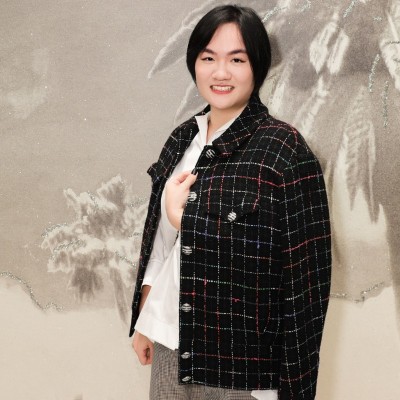
With over 10 years of experience in the beauty and personal care industry, Ying Hong has supported 200+ brands and 6,000+ product developments. Her expertise spans custom formulation, regulatory compliance, and OEM/ODM manufacturing. She shares practical insights to help beauty brands navigate product development and manufacturing.

 English
 Français
 Русский язык
 español


