Please don't hesitate to reach out to us whenever you need assistanco. Well make sure to respond to you promptly.
 lyang_huang@gadetin.com.cn
gadetin@gadetin.com.cn
lyang_huang@gadetin.com.cn
gadetin@gadetin.com.cn +86 136 7623 8313
 +86 153 3806 1804
 09:00 - 18:00
 No.2 Zhenglong 1st street, Dawang National Hi-tech Developmet Zone, Zhaoqing City, Guangdong, China
In today’s highly competitive personal care market, building an in-house manufacturing facility requires prohibitive capital investment in high-shear mixing equipment, R&D laboratories, and compliance management. Emerging beauty brands, expanding retailers, and global distributors choose full-service OEM manufacturers because they provide an integrated solution—from custom formulation to mass production—that eliminates these capital barriers, reduces supply chain complexity, and drastically accelerates time-to-market. For companies entering diverse markets across Southeast Asia, Eurasia, the Middle East, and Africa, partnering with a comprehensive manufacturer is the most strategic method for scaling a secure, profitable, and compliant product line. Capital and Infrastructure: Bypassing High Investment Costs (Reasons 1-4) Access to Advanced R&D and Custom Formulation (Reasons 9-12) Seamless Packaging and Product Presentation Support (Reasons 13-15) Consolidating Supply Chains Across Multiple Categories (Reasons 16-17) Brand owners choose full-service OEM manufacturers to eliminate the massive capital expenditures associated with building production facilities, acquiring manufacturing equipment, and maintaining internal quality management systems. Building an internal manufacturing system is highly resource-intensive. Expanding retailers and regional distributors often lack the capital to establish physical factories. By outsourcing to a full-service provider, brands transform fixed capital expenditures (CAPEX) into scalable operational expenses (OPEX). Reason 1: Avoid Factory Construction Costs: Setting up ISO-certified cleanrooms, climate-controlled warehousing, and specialized production floors requires millions in upfront investment. OEM partnerships grant immediate access to state-of-the-art, compliant facilities. Reason 2: Zero Equipment Maintenance Overhead: Homogenizers, high-shear mixers, automated filling lines, and labeling machines require constant maintenance, sanitation, and calibration. The OEM absorbs these operational and depreciation burdens entirely. Reason 3: No Internal R&D Staffing Costs: Hiring full-time cosmetic chemists, formulation engineers, and quality assurance managers is an expensive, ongoing commitment. A full-service partner provides an established team of experts on demand. Reason 4: Access to Existing Quality Management Systems (QMS): Developing standard operating procedures (SOPs) and GMP-compliant operational protocols from scratch is legally complex and time-consuming. OEMs already have certified quality control systems in place, ensuring immediate regulatory compliance and batch traceability. Decision Guidance: In-house manufacturing is generally only recommended when a corporation reaches massive global scale and requires absolute control over proprietary, patented manufacturing technologies. A full-service OEM is more suitable when capital preservation and rapid brand scaling are the primary business objectives. Full-service personal care manufacturing drastically reduces product launch cycles by leveraging existing formula libraries, synchronized sample approvals, and immediate production readiness. The beauty market evolves rapidly, and missing a seasonal trend can result in lost revenue. Traditional fragmented manufacturing—where a procurement team hires separate formulators, packaging suppliers, and filling factories—causes severe delays due to cross-vendor coordination and logistical bottlenecks. Reason 5: Ready-to-Launch Formula Options: Professional manufacturers possess extensive libraries of pre-tested, physically stable formulas that can be white-labeled immediately, cutting R&D time from typical 12-month cycles down to mere weeks. Reason 6: Faster Trial-and-Error Cycles: Independent or in-house labs often face ingredient sourcing bottlenecks. OEMs have dedicated testing facilities and vast raw material inventories to rapidly iterate product samples until the desired texture and performance are achieved. Reason 7: Streamlined Concept-to-Market Process: By handling concept development, sample approval, and mass production under one roof, full-service OEMs eliminate the logistical friction and transit times of moving projects between multiple third-party laboratories and fillers. Reason 8: Agile Response to Market Trends: Whether it is a sudden consumer demand for a trending active ingredient (like peptides or specialized ceramides) or a seasonal product launch, an OEM’s established supply chain can source and produce much faster than an independent brand starting from scratch. An OEM ODM cosmetic manufacturer provides brands with direct access to experienced chemical engineers, facilitating advanced custom formulation, precise ingredient selection, and rigorous product optimization to prevent chemical instability. Many brand founders excel at consumer positioning and marketing but lack the technical chemistry expertise required to turn a conceptual brief into a stable physical emulsion. A capable OEM bridges this gap. Partnering with a dedicated facility like Gadetin Group allows brands to leverage extensive formula resources and customized product development capabilities to create highly differentiated personal care products. Reason 9: Expert Custom Formulation Development: For brands needing unique selling propositions (USPs), OEMs can engineer proprietary formulas from scratch that align perfectly with target market claims, ensuring optimal rheology (flow and texture) and skin feel. Reason 10: Ingredient Selection and Compatibility Support: Not all active ingredients mix well; for instance, certain acids can destabilize emulsion systems or deactivate peptides. OEM chemists provide crucial guidance on ingredient synergy, preventing issues like phase separation or compromised preservative systems. Reason 11: Formula Modification and Optimization: Brands can take existing baseline formulas and systematically modify them (e.g., swapping a synthetic fragrance for a natural essential oil blend, or adjusting the viscosity for a specific pump type) to match consumer preferences efficiently. Reason 12: Rigorous Product Testing Procedures: A reliable partner conducts mandatory physical stability testing (freeze-thaw cycles, high-temperature incubation), preservative efficacy testing (PET), and batch consistency control to ensure the formula performs safely over a standard 24-to-36-month shelf life. Integrated packaging solutions from a full-service OEM ensure chemical compatibility between the complex formulation and the container, while streamlining bottle selection, labeling, and aesthetic customization. Packaging is not just about aesthetics; it is a critical engineering component. Incompatible packaging can lead to product leakage, chemical leaching from plastics, or rapid formula degradation due to oxidation. Reason 13: Container and Formula Compatibility (Compatibility Testing): A full-service partner physically tests the specific formula inside the chosen primary packaging in incubation chambers to ensure dip tubes do not swell, pumps do not clog from high-viscosity creams, and plastic walls do not degrade from aggressive essential oils or active acids. Reason 14: Extensive Packaging Supplier Network: Instead of forcing procurement managers to source and vet their own bottle suppliers globally, OEMs provide a curated selection of standardized or custom molds, accelerating the decision-making process and reducing minimum order quantity (MOQ) hurdles. Reason 15: Labeling and Product Appearance Customization: OEM partners assist with labeling support, ensuring that the brand’s visual identity is applied correctly (e.g., silk screening, hot stamping, or shrink wrapping) and that ingredient declarations comply with regional INCI (International Nomenclature of Cosmetic Ingredients) laws. Working with a multi-category personal care OEM manufacturer simplifies supply chain management by allowing procurement professionals to develop skincare, hair care, body care, and specialized lines under a single, highly audited vendor relationship. The biggest concern for sourcing directors is the administrative burden and risk of managing multiple disparate suppliers. When a successful skincare brand decides to expand into hair care, sourcing, auditing, and onboarding a completely new factory is highly inefficient and introduces new quality control risks. Reason 16: Single-Point Supplier Management: Handling formula development, raw material procurement, manufacturing, and packaging through one partner drastically reduces communication costs, misalignments, and project management overhead. Reason 17: Broad Category Expansion Capabilities: A comprehensive manufacturer allows brands to easily scale their product portfolios over time—moving seamlessly from facial care into body care or baby care—without starting the rigorous vendor vetting process over again. For brands expanding into Southeast Asia, the Middle East, Eurasia, and Africa, full-service OEMs engineer products adapted to local climates and manage the complex international export documentation required for legal market entry. Manufacturing capability alone is insufficient for international brand expansion. Distributors and brand owners require a partner who understands regional physical nuances, varying consumer sensory preferences, and stringent cross-border regulatory frameworks. Reason 18: Climate-Specific Formulation Adjustments: A heavy, occlusive cream suitable for European winters will feel suffocating and cause breakouts in Southeast Asia. OEMs adjust product rheology, focusing on lightweight, oil-control, gel-based properties for hot and humid climates, or intense, long-lasting hydration systems for arid Middle Eastern regions. Reason 19: Price Positioning and Raw Material Strategy: For emerging consumer markets in Africa or Eurasia, affordability is often key. A skilled OEM formulator can strategically balance raw material costs—substituting highly expensive botanicals with cost-effective, high-performing synthetic equivalents—to achieve a specific target retail price point without sacrificing safety or basic efficacy. Reason 20: Export Processes and International Quality Expectations: Navigating product documentation, PIF (Product Information Files), Certificates of Free Sale, and Halal certifications is critical. A full-service partner ensures the final product meets all regulatory safety standards and labeling requirements for legal import and retail distribution in the destination country. To summarize the strategic shift in the personal care industry, brand owners and procurement teams should evaluate their operational approach using the following detailed comparison matrix to mitigate risk and optimize capital. The decision to outsource manufacturing is no longer just a cost-saving measure; it is a critical strategic growth enabler. Brands choose full-service OEM manufacturers because they require a reliable partner capable of reducing development complexity, drastically shortening launch times, providing professional chemical formulation support, and facilitating the rapid build-out of scalable personal care product lines. By entirely removing the heavy burden of supply chain coordination, equipment maintenance, and facility operations, brands can dedicate their resources exactly where they matter most: marketing, channel distribution, and customer acquisition. Partnering with a comprehensive personal care OEM manufacturer like Gadetin Group provides brand owners with integrated OEM/ODM solutions—taking a concept from the initial laboratory blueprint all the way through to commercial mass production and global export readiness. Ready to accelerate your brand's growth without the manufacturing overhead? Whether launching a flagship product line or expanding a regional retail portfolio across new categories, professional, end-to-end manufacturing support is essential for minimizing risk. Contact Gadetin Group today to discuss your specific product concepts, request targeted custom formulation samples, and build a highly reliable, scalable personal care supply chain. 1. What exactly does a full-service OEM manufacturer do differently than a standard contract filler? A standard contract filler strictly pumps your pre-made bulk formula into bottles. A full-service OEM (Original Equipment Manufacturer) handles the entire product development lifecycle. This includes R&D, custom formulation, raw material sourcing, packaging compatibility testing, mass manufacturing, microbiological quality control, and export documentation, acting as an integrated supply chain partner. 2. How does an OEM partner help emerging beauty brands scale efficiently? New brands typically lack fully equipped R&D laboratories and scalable manufacturing facilities. A full-service partner transforms a conceptual brief into a commercial reality by providing access to veteran chemists, existing stable formula bases, and scalable production lines, eliminating the need for the brand to invest millions in physical factory infrastructure. 3. Can an OEM effectively help a brand expand into entirely new product categories? Yes. If a successful facial skincare brand wishes to launch a haircare or body care line, a multi-category OEM can formulate and manufacture these new products in-house. This allows the brand to expand its retail portfolio rapidly without undertaking the risky and time-consuming process of auditing and onboarding a completely new factory. 4. How do advanced manufacturers adapt products for different regional climates and environments? Experienced cosmetic chemists adjust the formula's rheology (texture and flow characteristics) and active ingredient profiles based on the specific target market. For example, they engineer lightweight, fast-absorbing, and sebum-controlling gel systems for humid environments like Southeast Asia, while creating robust, highly occlusive water-in-oil emulsions for extremely dry climates like the Middle East. 5. What is the technical difference between custom formulation and ready-to-launch formulas? Ready-to-launch formulas are pre-developed, fully stability-tested products that only require bespoke branding and packaging; they offer the fastest, lowest-risk time-to-market. Custom formulation involves engineering a formula from scratch to meet highly specific performance claims, integrate unique active ingredients, or achieve targeted sensory profiles. This process requires thorough physical and microbiological testing, taking longer but offering maximum market differentiation. 6. Does a full-service OEM ensure the chemical compatibility of the packaging? Yes. A comprehensive manufacturing partner will not only source packaging that aligns with brand aesthetics but, crucially, run compatibility protocols. They incubate the specific formula inside the chosen primary container to ensure plastics do not leach, essential oils do not degrade the bottle walls, and high-viscosity creams do not clog the pump mechanisms over the product's shelf life.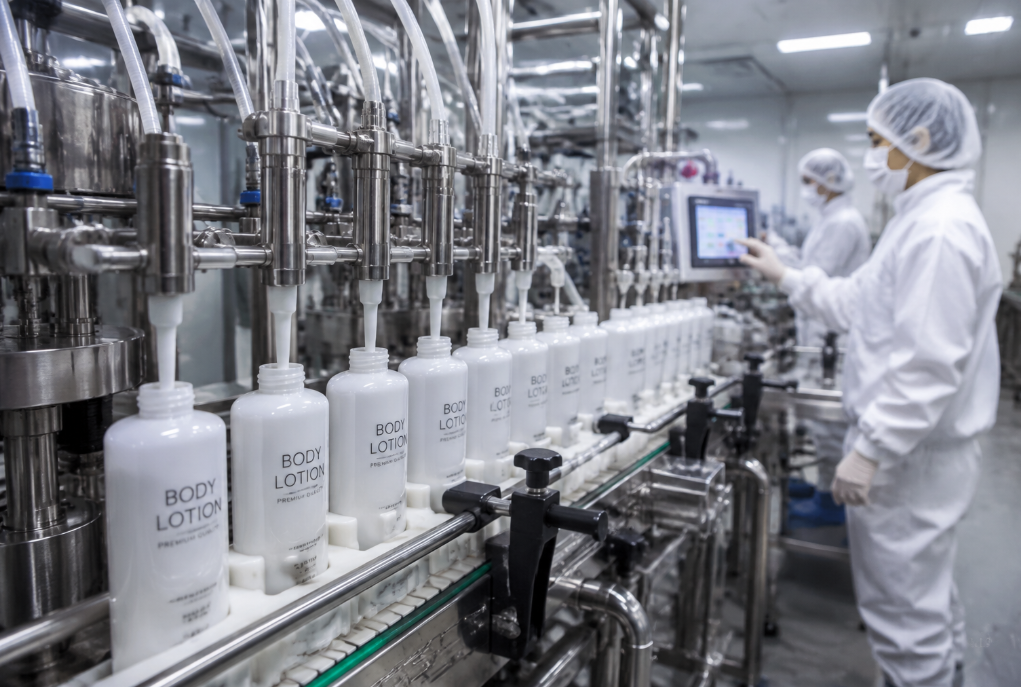
Table of Contents
1. Capital and Infrastructure: Bypassing High Investment Costs (Reasons 1-4)
2. Accelerated Go-to-Market Strategies (Reasons 5-8)
3. Access to Advanced R&D and Custom Formulation (Reasons 9-12)
4. Seamless Packaging and Product Presentation Support (Reasons 13-15)
5. Consolidating Supply Chains Across Multiple Categories (Reasons 16-17)
Multi-Category Manufacturing Capability & Technical Considerations
6. Regional Adaptation and Export Compliance (Reasons 18-20)
7. Final Decision Framework: In-House vs. Full-Service OEM
8. Conclusion & Next Steps
Frequently Asked Questions (FAQs)

 English
 Français
 Русский язык
 español


